
Venture capital in 2026 looks very different from just a few years ago. Investors have become more careful these days. They rely more on data and clear results. And they prefer startups that can grow across borders, not only in one local market.
Singapore has become one of the most important places in Asia for this new type of global investing. It connects capital from Southeast Asia, India, Europe, and the Middle East. At the same time, Kazakhstan is quietly becoming the most active startup market in Central Asia. But it is still early in its journey, with few large exits and limited late-stage funding.
This is where events such as the Venture Capital World Summit (VCWS) play an important role. They bring investors and founders from emerging markets into the same room, giving them space to talk openly, compare expectations, and see if there is a real fit.
VCWS Singapore 2026 at a Glance
Date & Time: Tuesday, Mar 10, 2026.1 pm to 5 pm.
Venue: Singapore Land Tower, 50 Raffles Place,
Cingapura, Singapore, SG, 048623
Ticket: Official Website of VCWS
Venture Capital World Summit is part of a global conference series that is designed to connect investors with what the organizers call ‘investor-ready’ startups. These are companies that already have a product, some traction, and a clear plan to grow.
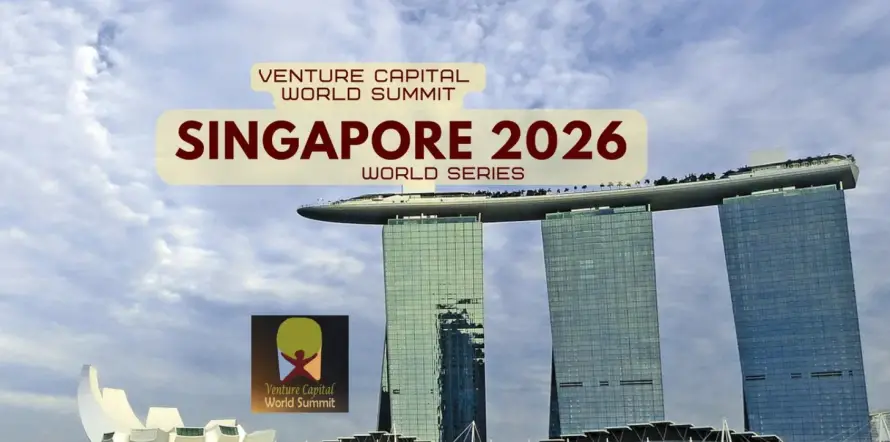
Photo Credit: vcworldsummit.com/tickets/singapore-2026/
In Singapore, the event is held in the city’s most financial district. This is utterly important because it shows what type of event it is going to be. It is not a noisy startup festival or a technology show. Instead, it is a business-focused gathering where people come to talk seriously, exchange ideas, and build professional relationships.
The agenda of the program is simple and quite practical. There will be short talks from speakers, panel discussions, small pitching sessions, and long breaks for networking. In many cases, the most useful conversations do not happen on stage. They happen in the hallways, while waiting for coffee, or during evening meetups.
Most importantly, VCWS does not promise funding. It is better to think of it as a first step. You go there to meet people, share your story, build trust, and open the door to future conversations that may lead to real opportunities later on.
What Investors Are Really Looking For at VCWS
When you walk into a room like VCWS, it helps to understand what investors truly care about.
These include applied artificial intelligence, fintech infrastructure, cybersecurity, and enterprise software. These areas fit well with Singapore’s role as a financial and business center and also follow global digital growth trends.
Next, investors are no longer impressed by ideas alone. Right now, they want to see the real proof. This means steady revenue, growing customers, and clear unit economics. You should be able to explain well in simple terms, like how your business makes money today and how it can grow tomorrow.
Of course, very early-stage startups still raise funding. But, most serious capital is focused on companies that are ready to expand into new markets within the next two or three years.
Photo Credit: vcworldsummit.com/tickets/singapore-2026/
Finally, structure and management matter a lot. Investors look for a clean company setup, clear ownership, and good internal controls. They also prefer those teams that can work across borders as well.
This is where many Kazakhstan startups will get a strong opportunity. They will benefit from skilled engineers, lower development costs, and growing experience in building products for global customers. If they also build the right company structure and show clear business results, they can compete successfully on the global stage.
How Capital Is Being Deployed Today
Across Asia, venture capital has become more focused. Instead of spreading money across many small bets, investors now prefer fewer deals backed by stronger confidence. You will also notice more family offices and institutional investors at events like VCWS, alongside traditional venture capital firms. These investors usually take a long-term view and pay close attention to risk and stability.
Most funding talks today focus on Series A and Series B startups. These are companies that have already tested their ideas and can show that customers are paying for their product. At the same time, founders are expected to be more prepared. And fundraising now depends on clear documents, shared data, and real performance results.
Kazakhstan’s Startup Ecosystem in the Global Market
Kazakhstan now leads Central Asia in venture activity. Most deals, however, are still at the seed and early stages. One company that changed how the world looks at Kazakhstan is Kaspi.kz. Its international success showed that large tech businesses can come from the region.
Today, foreign investors are most interested in fintech, B2B software, IT services, and applied AI startups from Kazakhstan.
Photo Credit: vcworldsummit.com/tickets/singapore-2026/
Two institutions play a key role in Kazakhstan. Astana Hub supports startups with programs, visas, and visibility. On the other hand, the Astana International Financial Centre (AIFC) provides a legal and regulatory environment that is quite familiar to global investors.
Still, big challenges remain. There is little late-stage capital and few exits. This means startups must think globally much earlier than founders in larger markets.
The Kazakhstan Playbook for Global Investment
Most successful startups in Kazakhstan follow a similar path.
They build their products at home, where engineering talent is strong, and costs are lower. At the same time, they sell to customers in other countries to show real growth and reduce concerns about market size.
Funding for startups in Kazakhstan usually happens in stages. They start by raising money from local angel investors, then move on to regional funds, and later to global venture firms. Most of these startups build products for business customers and use subscription or recurring revenue models. Their products are made to follow international rules and standards. Teams are often based in different countries, with development in Kazakhstan and sales or partnerships in other markets.
Events like the Venture Capital World Summit will play an important role in this journey. The Venture Capital World Summit will give Kazakhstan founders a direct way to meet global investors, share their progress, and build trust in a professional setting.
Conclusion
Singapore represents where global venture capital demand is strongest, while Kazakhstan is becoming a growing source of globally minded founders. VCWS Singapore 2026 shows how these two ecosystems are starting to connect more closely.
Today, startup success depends less on location and more on strong structure, scalable growth, and clear communication. Kazakhstan startups that think globally from the start are best placed to benefit from this change.